
Frances Black: addiction is toxic, it wants to destroy everything it can
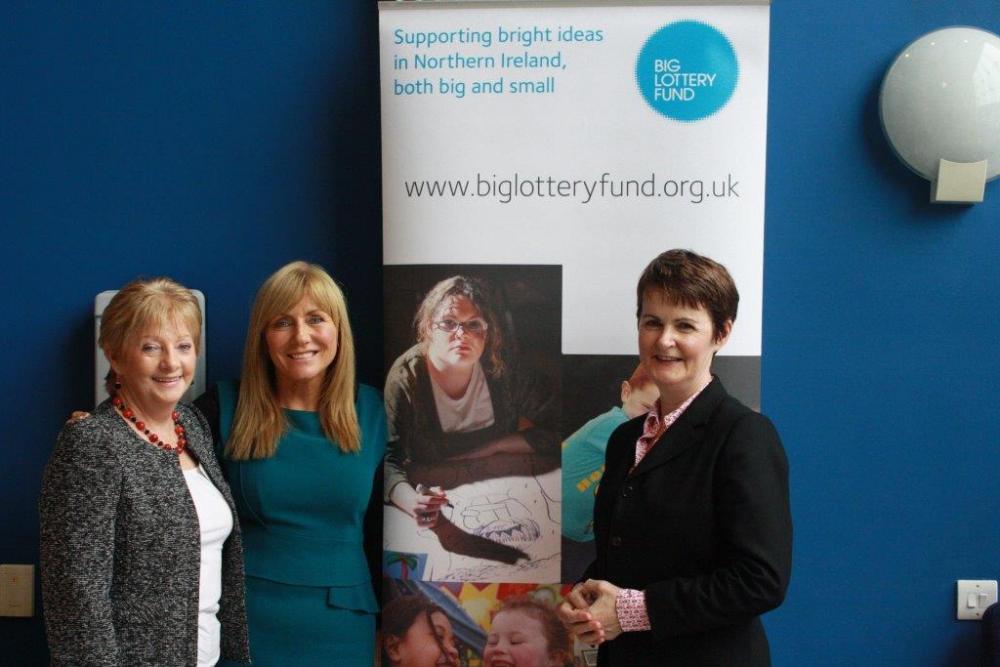
Scope speaks with Irish singer Frances Black about her work as an addiction counsellor and the founder of RISE, a support group for the loved ones of those with addiction, which follow on from her own battles with alcohol.
If you are one of most successful singers in Ireland, still touring and with a discography going back over two decades you are probably already busy enough.
But for Frances Black, that is just one aspect of her life. The mum-of-two and recovering alcoholic is also the hands-on figurehead and founder of The RISE Foundation – Recovery In a Safe Environment - a service focused on the recovery of the loved ones of those suffering addiction.
Frances left school at 15, joining her musical family on stage – the beginning of a successful music career that continues to this day – but already taking steps down the road to alcoholism.
She was married with her first child at 19, her second two years later, and during this period drink became a far-too-frequent comfort.
Her alcoholism didn’t involve waking up with a vodka or whisky, it was drinking beer in the evening and at weekends – but every evening, and always at the weekends, with alcohol a crutch for negative self-esteem, and also a way to become more sociable.
It is a situation that is probably mirrored in many homes in Northern Ireland, the rest of the UK as well as the Republic of Ireland, and it took some time before Frances even realised she was an alcoholic.
In fact, it was only when coming across another woman in identical circumstances who herself had come to realise she was an alcoholic, that the singer began to look more closely at her own behaviour, and how problematic it was.
After failed attempts to give up on her own she contacted a clinic and received some help. Eventually she was able to give up alcohol, and has now been teetotal since she was 28.
Later she returned to college in the early noughties and qualified as an addiction counsellor, working at the Rutland Addiction Treatment Centre in Dublin where she was ultimately inspired to found The Rise Foundation in 2009.
Rise’s approach to addiction is different from most treatments in that it focuses on the family members of people suffering addiction – and offers a range of treatments, such as one-to-one sessions, 10-week courses and group therapy.
Frances said she became increasingly focused on the lack of help for those one-step removed, but emotionally immersed, in addiction who are usually left as devastated by the condition as the people who suffer it directly.
She also points out that by strengthening loved ones – mothers, fathers, husbands, wives, partners, children and so on – there are overall better outcomes for the person suffering addiction as well, pointing out that the condition’s reach goes far beyond the individual and, if the aim is to tackle it, it must be addressed everywhere it has an effect.
Even the most well-intentioned loved ones of those in addiction can end up as nothing more than enablers, while also suffering themselves, a situation Frances seeks to tackle.
A positive choice
The singer’s own experiences have obviously informed her choice to become an addiction counsellor – they left her with empathy and a body of knowledge that provides a certain amount of help with her work on addiction.
However, she says this is all forward looking, and her efforts are not driven on by her past, by a desire to set anything straight or by a negative emotion such as guilt – which she says would be “destructive” and counter-productive.
“My work with family members just blew me away, in the sense I just felt there was a big need to set up an organisation that supports them. It was like as if ‘now I know why all this stuff happened to me in my life, because I’m meant to be here’.
“Family members touched my heart in work, I suppose I could identify with their powerlessness and felt I connected with them on a deeper level.
“I didn’t do it because I felt in the past I had impacted on my family – I’m sure I did, I have no doubt I did – but what drove me was something different, and it came from what I heard from families while working at Rutland.
“Family members could be very controlling, and would want to make sure their loved one was safe – ‘Where are you going? What time are you coming back? I can wait for you.’
“You can help someone who is in addiction, give them intensive help and perhaps the tools to stay away from damaging behaviour, but they are still going to go back into an unhealthy environment because the family needs its own support and recovery.
“That realisation was the first trigger, then I met one particular woman and I realised she was obsessed, she was addicted to her husband and to how she was going to get him clean, and she had forgotten about herself and her children and her own life and she was going to become totally enmeshed in his world and I saw how unhealthy that was for him, and for her and for their children too.
“The addiction comes into the family dynamic and it wants to destroy the person but also destroy all the people that care for them.
“If we can get family members to learn how not to get pulled into unhealthy, toxic behaviour, how to step away from it, get off the dancefloor, it might be important because then sometimes the person in addiction will follow suit.”
Difficult circumstances
Frances spoke with Scope on Tuesday, at the Impact of Alcohol Conference, organised by NICVA and the Centre for Effective Services, as well as giving a speech to assorted delegates from the sector.
She told of how her own experiences with addiction ultimately led her to a place where she felt she could make a big difference in people’s lives while they try and tackle addiction, and its pernicious nature which can manifest in many ways but repeats the same horrific pattern.
Indeed, while her own issues were with alcohol, the case that gave her the especial resolve to found Rise involved an addiction to gambling and its disastrous consequences.
“She was a young woman with two children with her that day as she had no-one to mind them. They were very young and we got talking about what had happened – her husband was in for gambling, he had lost everything and it was a huge shock to her.
“Everything was gone, the house was being taken away, they had no more money and owed the bank a fortune, and her main concern was ‘How am I going to get him to stop gambling? Give me the tools, show me how to do that.’
“This woman was at the end of her tether, on the verge of a mental breakdown, on the verge of taking serious prescription tablets. I remember wondering why she did not have her own treatment centre, and a team of therapists, and we could work with her and explain to her that she is powerless in this situation.
“You are powerless - whether it’s gambling, or drinking, or whether your loved one is taking drugs. So I wondered about helping her with her anxiety, stress and what was almost an obsession with her husband. It was almost like she was addicted to him.
“She had no place where she could go to help her to find herself again and become a person again and in doing that she would become present again to her children.”
An island in denial
At the conference Frances praised the work done by others in the sector, saying it could be challenging but its importance is, if anything, underestimated.
She believes people in Northern Ireland and in the Republic of Ireland are almost blasé about the extent and reach of the pernicious use of alcohol, which frequently goes far beyond what is safe and healthy, and is what she describes as “our drug of choice”.
This was backed up by a speech from Dr Anne Kilgallen, the Deputy Chief Medical Officer for Northern Ireland, during which she took several minutes to list fact after fact after galling fact about the deeply-rooted issues of alcohol in Northern Ireland.
But Frances believes that this can be improved – both through entirely preventative measures and also through interventions at all stages.
She herself has worked with others in the sector, and travelled abroad to share best practice, such as at the Caron Foundation in Pennsylvania.
“I’m extremely passionate about this work, I really am. It’s also a very difficult area of work - it’s quite a toxic environment, because that’s the nature of addiction.
“Sometimes I think the whole of Ireland is in denial about it, particularly about alcohol, but it’s a massive problem, it’s huge. We need to address the situation.
“If we can help family members that can give a huge change to the family member who is in addiction. If the others in the family have learned to not be powerless, that can be life changing.
“It doesn’t always work like that, because addiction wants you did and it also wants to destroy your family, but I really believe if we can get to families and help them that’s the start of the road to recovery.”
Share Article...
Join the Conversation...
We'd love to know your thoughts on this article.
Join us on Twitter and join the conversation today.
Join Our Newsletter
Get the latest edition of ScopeNI delivered to your inbox.

 One final article – a goodbye
 A story to inspire ...
  The shameful waste of our money
  Fund's new strategy unveiled
 The true cost of deprivation and division
  An ancient key to longevity