
Should we expect our politicians to be smarter?
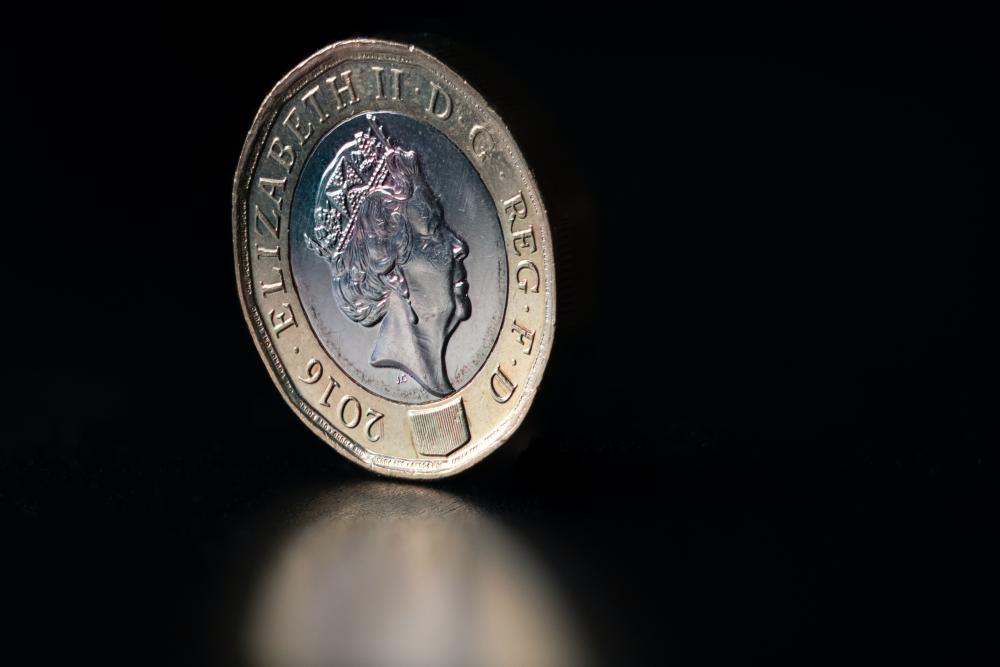
Elected representatives are tasked with huge decisions affecting all our lives. Public policy is awash with numbers - but a lot of politicians struggle with basic maths.
If you toss a coin twice, what are the odds you get double heads?
The answer is 25%. There is a half chance of heads on the first toss, same on the second. Half times a half is one quarter (or 25%).
But what are the odds that a Member of Parliament understands this question and can get the right answer?
The answer is 52%, according to new research from the Royal Statistical Society (RSS), who posed that very question to 101 of the 650 MPs in Westminster.
This survey is a repeat of one that took place ten years ago, when only 40% of MPs who were asked were able to provide a correct answer.
In the latest survey, 32% of those asked gave the incorrect answer of 50%, compared with 45% of MPs asked during the 2011 survey.
These scores are not excellent, far from it, and indicate that at least half of MPs have a shaky grasp of basic probability. The question posed is a straightforward one and being able to answer it correctly is not an indication of strong numeracy - but failing to answer it correctly does imply that someone’s numeracy could be better.
Even the apparent improvement should be subject to question. (If you ask a similar group of people the same question twice, ten years apart, it is likely that scores will improve second time round simply based on memory).
Does this matter? More or less everyone is able to stand for election, and this is an important part of democracy. A candidate’s mathematical ability, whether good or bad, seems like a niche consideration for the public as they go to their local polling station to cast their vote.
Nevertheless, the core work of a politician – MPs, MLAs, councillors, or members of any political forum – involves policy. And policy involves numbers.
Stats
Around 23% of children in Northern Ireland live in poverty. Research published late last year showed that this will rise above 25% within the next three years, without certain changes to the benefits system.
With those changes - removal of the two-child limit, and the introduction of £20 payments to families with children subject to certain criteria – it is estimated that just 17% of local children would be living in poverty by 2024-25. That fall of eight percentage points, from 25% to 17%, would represent a one third fall in child poverty, compared with the projection based on neither of those mitigations being established.
This is important policy detail. Its narrative is written in numbers.
Bear in mind, this is just an example. This research, by Save the Children NI and the Child Poverty Action Group, was published in November and since then Communities Minister has moved forward on a number of welfare mitigations measures. Several motions to progress legislation have been debated and passed in the Assembly over the past couple of weeks.
But almost all policy is like this. Numbers are everywhere.
Numbers tell the story of our struggling health service. One in five children in NI is on a health waiting list. 17,000 of them have been waiting over a year for a first appointment with a consultant. The reason the service is in trouble at all stems from an ageing population (which is a good thing), a consequence of which is more people living for longer with chronic health needs. This means demand for services is, and has been, rising by about 6% every year. Understanding how that rise in demand compounds over time is the key to understanding how the current health model is unsustainable, and why huge Bengoa-style reforms are needed.
Numbers tell all sorts of stories about failures of service. In 2019-20, only 52.8% of deaf children achieved good GCSEs compared with 76.2% of young people in general – an attainment gap of 23.4 percentage points – despite the fact that deafness is not a learning disability and, with appropriate support, deaf children should perform just as well as their peers.
Gross Domestic Product (GDP) is a measure of all the goods and services produced in a given area over a given period of time. It is a statistic that became the single biggest metric in Western policy (against the advice of some of its own pioneers). The bottom line in politics for decades has been a number
Now campaigners are trying to replace GDP – or, rather, reduce its importance while maintaining its use – with different measures of wellbeing. Wellbeing is, in theory, a more appropriate measure of the performance of a society. However, it is once again a number, one that can be formulated in countless, slightly different ways.
Fundamental changes could be made about how we direct our entire society, based on the shift from one aggregated statistical measure to another.
Productive politics
The RSS didn’t just ask MPs about the toss of a coin.
“With lateral flow tests now a regular occurrence for many, the RSS also wanted to gain a view on MPs knowledge of how the results from them should be viewed – a question that tests the understanding of what statisticians call Bayesian statistics.
“Those surveyed were asked: suppose there was a diagnostic test for a virus. The false-positive rate (the proportion of people without the virus who get a positive result) is one in 1,000. You have taken the test and tested positive. What is the probability that you have the virus? Of the politicians surveyed, 16 per cent gave the correct answer that there was not enough information to know.”
That last question might seem much more difficult than the previous two (especially for those of you unfamiliar with Thomas Bayes, which is probably almost everyone). That is borne out by the fact that only one in six MPs could get the right answer. However, it is still not that complex and – like it or not – public policy is complicated and awash with statistics.
So, when it comes to policy, this is a big part of the job. A 16% success rate is not encouraging.
At the same time, there is a lot more to policy than mere numbers.
A person might understand that 23% of NI children live in poverty without actually knowing what this means because they lack an appreciation of what poverty is, what it feels like, and how it affects someone’s life.
Being comfortable with percentages does not imply you understand what it is to choose between food and heating, or between an internet connection or suitable shoes for your children.
It is possible to have a great understanding of the statistical landscape of poverty without having any real human understanding of poverty itself.
If a politician has a weak understanding of stats and probability, that does not mean they cannot bring all sorts of other relevant knowledge to their role as an elected representative.
Yet a shallow understanding of numbers will always be a weakness. Moreover, there is no trade off; if someone can’t handle basic probability, it does not make them more likely to possess great personal and social wisdom.
What can be done about this? Is it a problem without a solution?
We can’t have numeracy tests as a condition to taking a seat. We should have as few conditions as possible on the path to election, other than getting enough votes. Electoral politics doesn’t need gatekeepers.
Ultimately democracy is about the public, not the politicians, and any variable numeracy among representatives is likely to reflect similar variations that exist among the population.
Could the general public do with some upskilling in stats and probability? Yeah, maybe. It might help with engagement on policymaking – but it’s not easy to make that happen.
Perhaps the best practical idea is that politicians – MPs, MLAs, whoever else – go back to school. If all elected representatives were compelled to work through courses in basic maths of relevance to their work, it might lead to a better grasp of numbers. This could mean better policy. And that’s better for everyone.
Share Article...
Join the Conversation...
We'd love to know your thoughts on this article.
Join us on Twitter and join the conversation today.
Join Our Newsletter
Get the latest edition of ScopeNI delivered to your inbox.

 One final article – a goodbye
 A story to inspire ...
  The shameful waste of our money
  Fund's new strategy unveiled
 The true cost of deprivation and division
  An ancient key to longevity